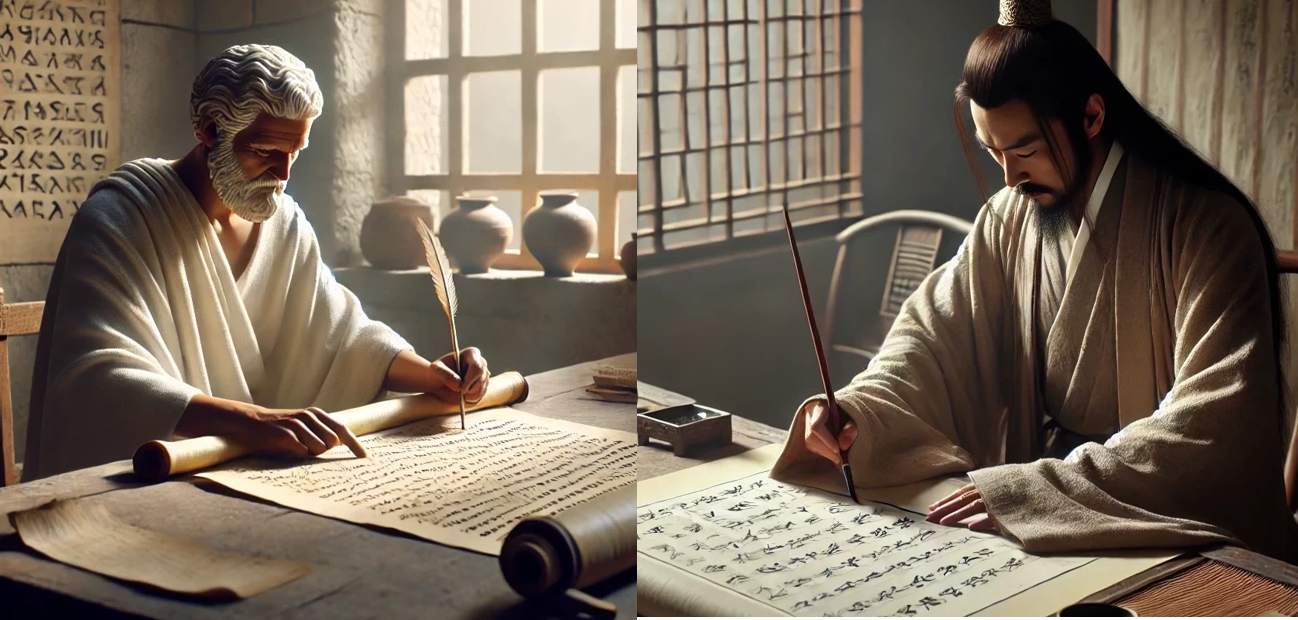
The Materials that Shaped Storytelling: Papyrus, Paper, and Ink
As civilizations advanced, so did their methods of recording stories. The development of papyrus, paper, and ink marked a significant leap in the evolution of storytelling, making the written word more accessible, durable, and efficient.
Timeframe
- Papyrus: First developed in ancient Egypt around 3000 BCE, papyrus was the main material used for writing in the ancient Mediterranean world.
- Paper: The invention of paper is credited to Cai Lun in 100 CE in China, and by the 11th century, it had spread to the Islamic world and Europe.
- Ink: Ink made from natural materials like soot, plants, and minerals was used alongside papyrus and paper to create durable, legible writing.
Method
Papyrus, made from the pith of the papyrus plant, was the earliest writing material widely used by ancient Egyptians, Greeks, and Romans. It was used to create scrolls, on which religious texts, literature, and administrative records were inscribed.
As papyrus was gradually replaced by paper, a cheaper and more versatile material, writing became more portable and accessible. Paper allowed for quicker production of texts, which was essential as literacy spread and the demand for written documents grew.
Ink, typically made from a mixture of carbon black or plant-based dyes, was crucial for writing on both papyrus and paper. Early inks were developed to be permanent, ensuring that stories and records could be preserved for generations.
Example
One of the most famous early uses of papyrus was the Egyptian Book of the Dead, a religious text that guided the deceased through the afterlife. Written on papyrus scrolls, these texts were buried with individuals to aid them in their journey.
As paper spread to the Islamic world and later Europe, it became the medium of choice for copying and preserving important texts. During the medieval period, scribes began creating illuminated manuscripts—handwritten books on parchment or paper decorated with intricate illustrations.
Detractors
There wasn’t significant backlash against the development of papyrus or paper itself, but early critics in Europe questioned the durability of paper compared to parchment, which was thicker and longer-lasting. Paper was initially seen as a cheaper, lower-quality material, especially for important documents.
Critics also feared that the increased accessibility of paper could lead to overproduction, diminishing the value of written works by making it too easy to produce trivial content.
Benefits
The development of papyrus, paper, and ink brought several key benefits to storytelling:
- Portability: Papyrus was lighter and easier to transport than stone tablets, and paper was even more portable and flexible, making it easier to spread stories and information across long distances.
- Efficiency: Paper could be mass-produced more easily than papyrus, allowing for quicker creation and distribution of texts. This efficiency played a crucial role in the rise of literacy and education.
- Durability: While papyrus was relatively fragile, especially in humid environments, paper combined with high-quality ink offered a more stable medium for preserving stories.
Deficits
Despite these advantages, there were some drawbacks:
- Durability Issues: Papyrus, although useful, was susceptible to damage and decay over time, particularly in damp environments. Early paper, while more versatile, was still considered less durable than materials like parchment or vellum.
- Perceived Inferiority: Initially, paper was seen as inferior to parchment, which was used for more prestigious or important texts. It took time for paper to be accepted for official records, religious texts, and legal documents.
Conclusion
The advent of papyrus, paper, and ink represented a major evolution in storytelling materials, making it easier for civilizations to record and preserve their stories. These materials played an essential role in the spread of knowledge and laid the foundation for the future of storytelling.
As we continue exploring the evolution of storytelling methods, the next revolution—the invention of the printing press—will take this material foundation to new heights, allowing for mass production and the widespread distribution of stories.


Leave a Reply